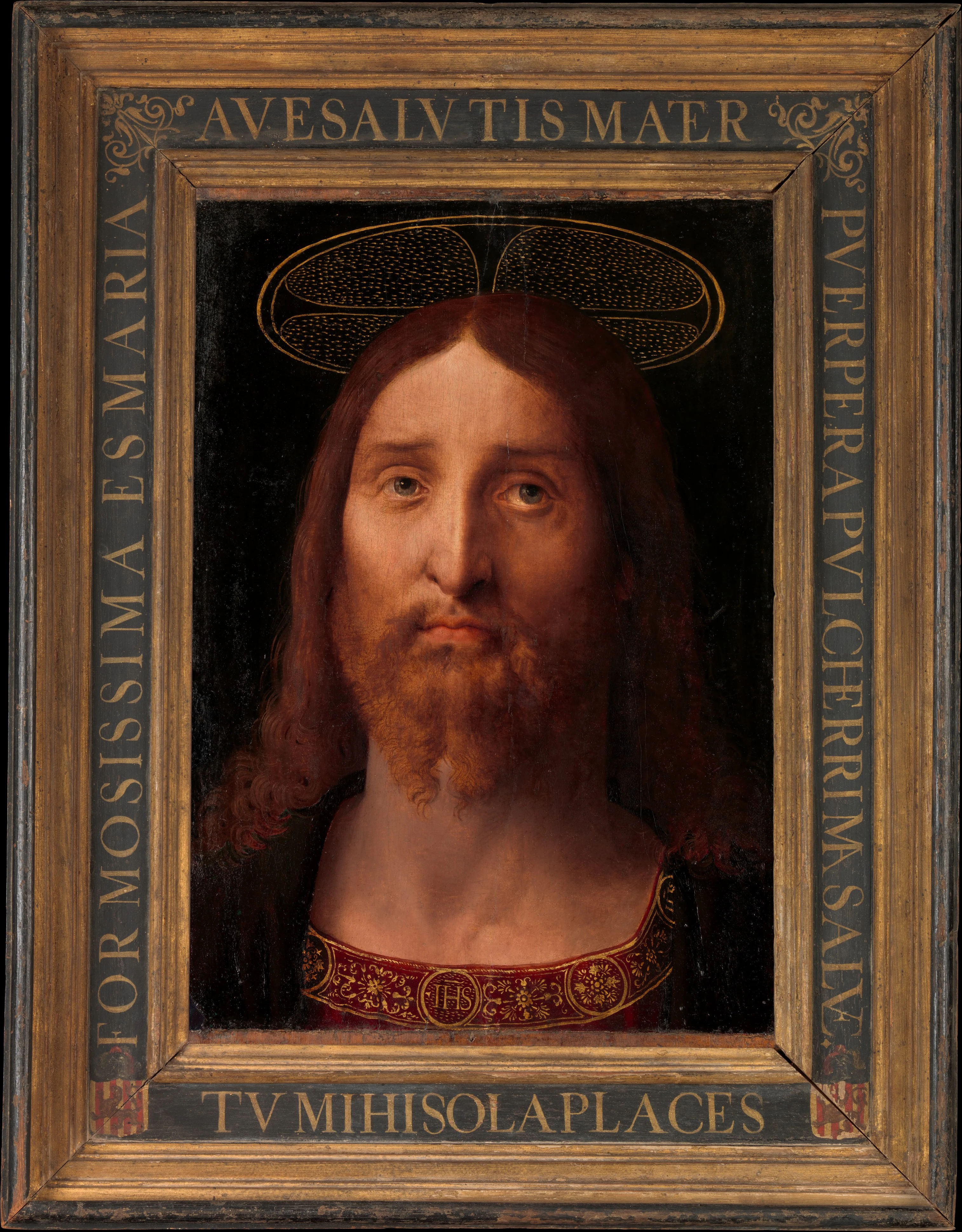
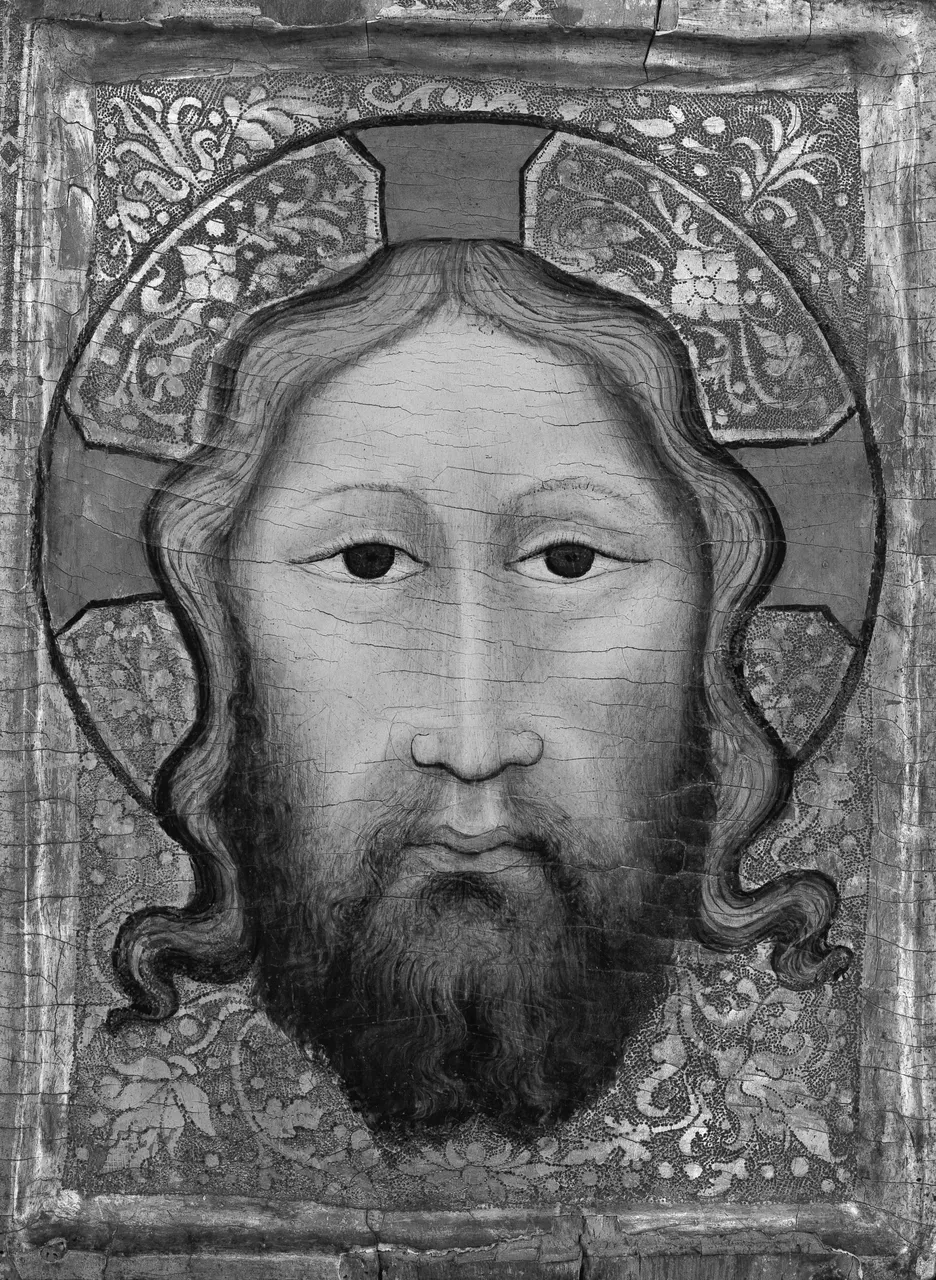
Painted around 1506, this work presents a portrait of Jesus Christ, probably intended for private devotion. Unlike traditional representations of the Savior of the World or the Man of Sorrows, Jesus is neither shown blessing nor bearing visible signs of the Passion. His distant gaze and serene expression invite contemplation. The influence of Leonardo da Vinci, with whom Yáñez was associated during his time in Italy, is evident in the sfumato technique, which softens the contours of the face and creates delicate transitions between light and shadow. The gold embroidery on his garment, meanwhile, reveals the influence of Flemish painting and the Spanish taste for ornamentation. A particularly curious detail lies in the frame, which is not original to the painting: its Latin inscriptions, such as Ave salutis mater (Hail, Mother of Salvation) and Formosissima es Maria (Mary, you are most beautiful), are dedicated to the Virgin Mary. It is a late 16th-century Spanish frame, repurposed for this image of Christ in 2014.
Pintada por volta de 1506, a obra apresenta um retrato de Jesus Cristo, provavelmente destinado à devoção privada. Diferentemente das representações tradicionais do Salvador do Mundo ou do Cristo Sofredor, Jesus não aparece abençoando nem apresenta sinais visíveis da Paixão. Seu olhar distante e a expressão serena convidam à contemplação. A influência de Leonardo da Vinci, com quem Yáñez esteve ligado durante sua passagem pela Itália, é perceptível na técnica do sfumato, que suaviza os contornos do rosto e cria transições delicadas entre luz e sombra. O bordado dourado da veste, por sua vez, revela a influência da pintura flamenga e o gosto espanhol pela ornamentação. Um detalhe especialmente curioso está na moldura, que não pertence originalmente à pintura: suas inscrições latinas, como Ave salutis mater (Salve, Mãe da Salvação) e Formosissima es Maria (Maria, és belíssima), são dedicadas à Virgem Maria. Trata-se de uma moldura espanhola do final do século XVI, reaproveitada para esta imagem de Cristo em 2014.
Pintada hacia 1506, esta obra presenta un retrato de Jesucristo, probablemente destinado a la devoción privada. A diferencia de las representaciones tradicionales del Salvador del Mundo o del Cristo Doliente, Jesús no aparece bendiciendo ni muestra señales visibles de la Pasión. Su mirada distante y su expresión serena invitan a la contemplación. La influencia de Leonardo da Vinci, con quien Yáñez estuvo vinculado durante su estancia en Italia, se aprecia en la técnica del sfumato, que suaviza los contornos del rostro y crea delicadas transiciones entre la luz y la sombra. Los bordados dorados de su vestimenta, por su parte, revelan la influencia de la pintura flamenca y el gusto español por la ornamentación. Un detalle especialmente curioso se encuentra en el marco, que no pertenece originalmente a la pintura: sus inscripciones latinas, como Ave salutis mater (Salve, Madre de la Salvación) y Formosissima es Maria (María, eres bellísima), están dedicadas a la Virgen María. Se trata de un marco español de finales del siglo XVI, reutilizado para esta imagen de Cristo en 2014.