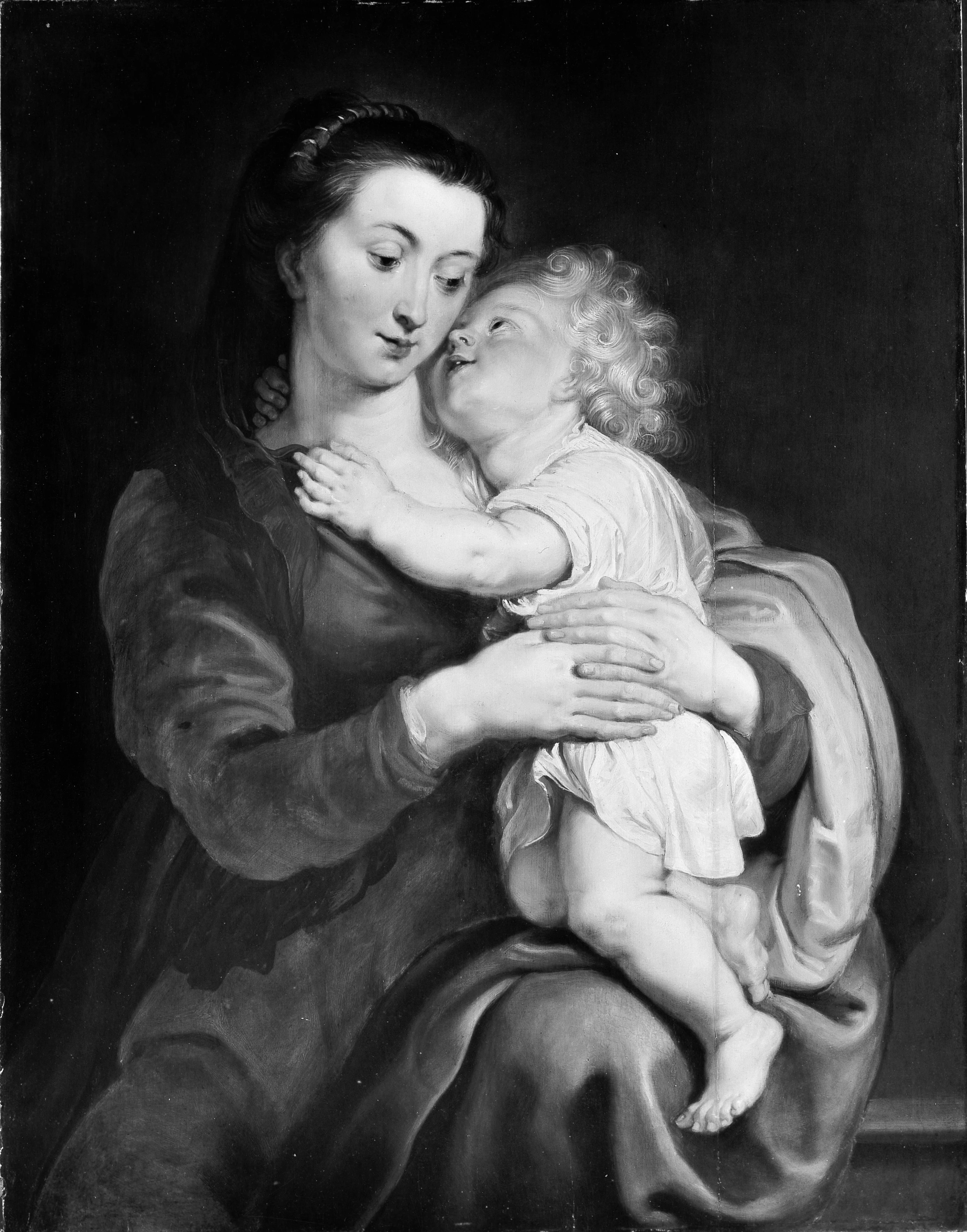
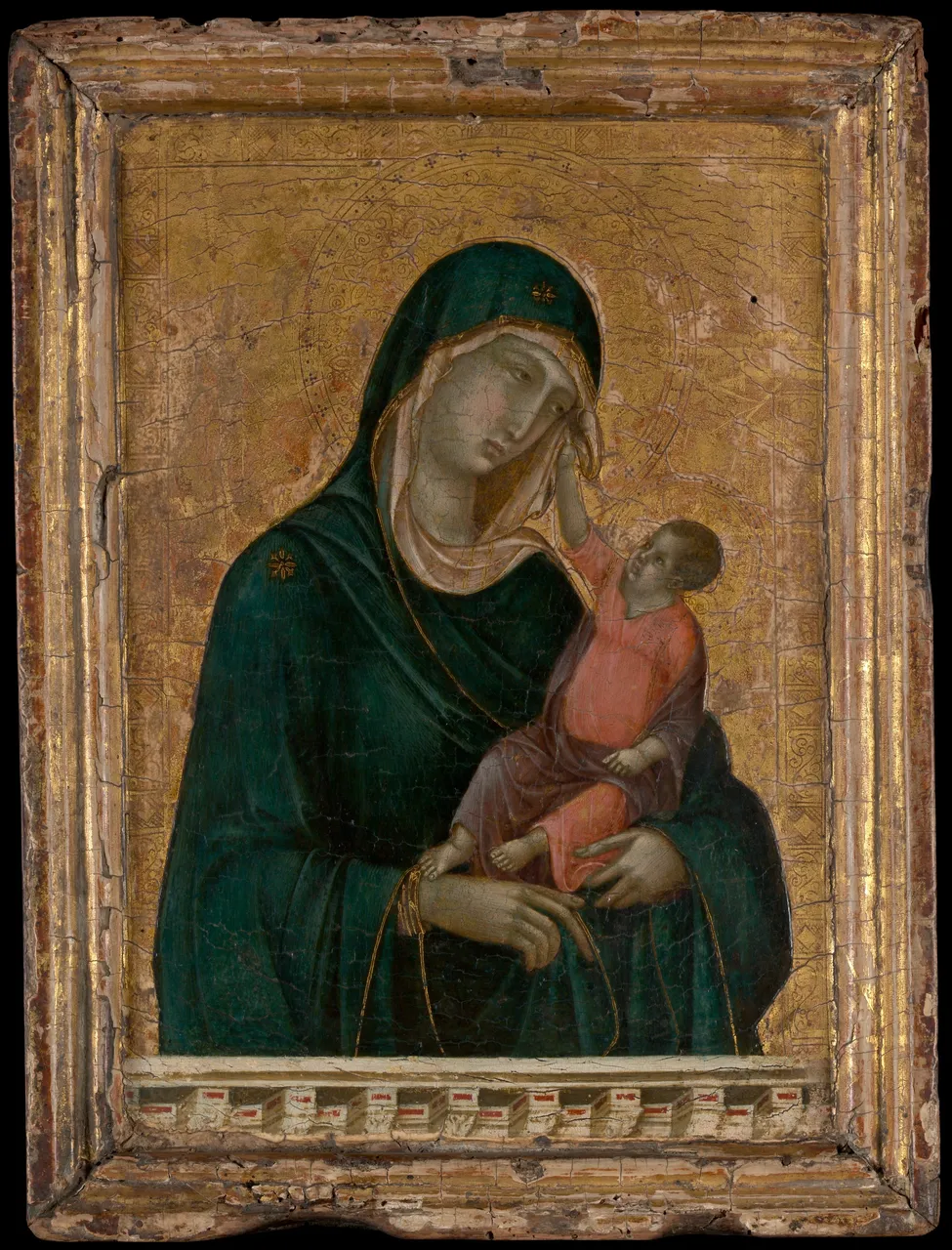
This painting depicts the Virgin Mary holding the Christ Child, who embraces her and looks lovingly into her face. The composition belongs to the tradition of devotional images intended to encourage contemplation of the relationship between Christ and his Mother, emphasizing the Savior's humanity and Mary's maternal affection. Produced in Peter Paul Rubens's workshop, the painting derives from a composition by the Flemish master whose original has not survived. According to studies cited by the auction house Lempertz, Rubens drew inspiration from Italian Renaissance painting, particularly Raphael's Tempi Madonna, adapting the intimacy between Mother and Child to the monumental language of the Baroque. The composition became widely circulated through an engraving by Jonas Suyderhoef and several versions produced in Rubens's workshop. One of these is the painting preserved at the Metropolitan Museum, attributed to the master's collaborators, without confirmed evidence of his direct participation.
Esta pintura representa a Virgem Maria segurando o Menino Jesus, que a abraça e dirige amorosamente o olhar para seu rosto. A composição pertence à tradição das imagens destinadas à contemplação da relação entre Cristo e sua Mãe, destacando a humanidade do Salvador e o afeto materno de Maria. Produzida na oficina de Peter Paul Rubens, a obra deriva de uma composição do mestre flamengo cujo original não foi preservado. Segundo estudos citados pela casa de leilões Lempertz, Rubens inspirou-se em modelos da pintura renascentista italiana, especialmente na Madonna Tempi, de Rafael, adaptando a intimidade entre Mãe e Filho à linguagem monumental do barroco. A composição alcançou considerável circulação, sendo reproduzida por meio de uma gravura de Jonas Suyderhoef e de diversas versões realizadas na oficina de Rubens. Uma delas é a pintura conservada no Metropolitan Museum, cuja autoria é atribuída aos colaboradores do mestre, sem que sua participação direta esteja comprovada.
Esta pintura representa a la Virgen María sosteniendo al Niño Jesús, que la abraza y dirige amorosamente la mirada hacia su rostro. La composición pertenece a la tradición de las imágenes devocionales destinadas a favorecer la contemplación de la relación entre Cristo y su Madre, destacando la humanidad del Salvador y el afecto maternal de María. Realizada en el taller de Pedro Pablo Rubens, la obra deriva de una composición del maestro flamenco cuyo original no se ha conservado. Según estudios citados por la casa de subastas Lempertz, Rubens se inspiró en modelos de la pintura renacentista italiana, especialmente en la Madonna Tempi, de Rafael, adaptando la intimidad entre Madre e Hijo al lenguaje monumental del barroco. La composición alcanzó una amplia difusión mediante un grabado de Jonas Suyderhoef y diversas versiones realizadas en el taller de Rubens. Una de ellas es la pintura conservada en el Metropolitan Museum, atribuida a los colaboradores del maestro, sin que esté demostrada su participación directa.