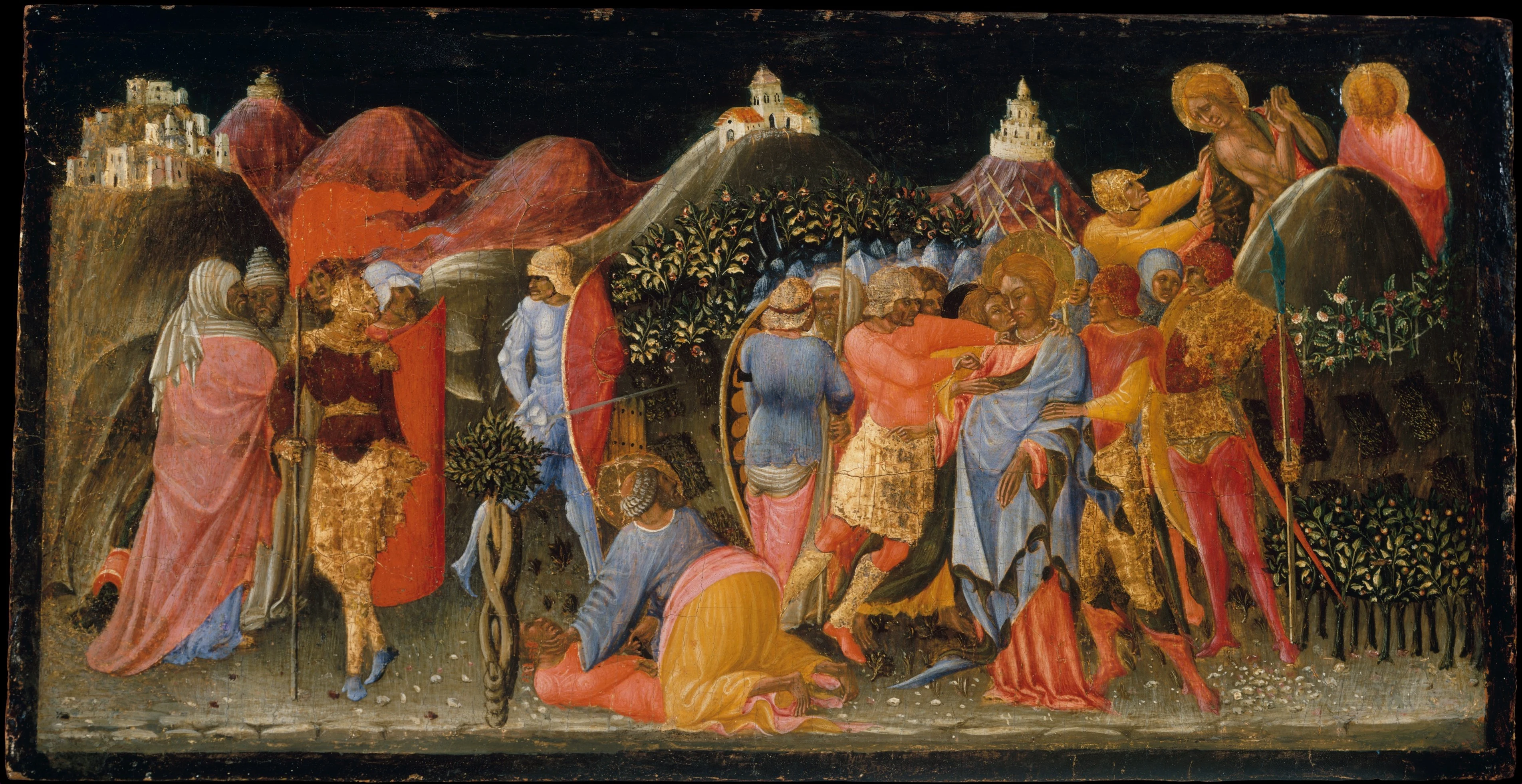
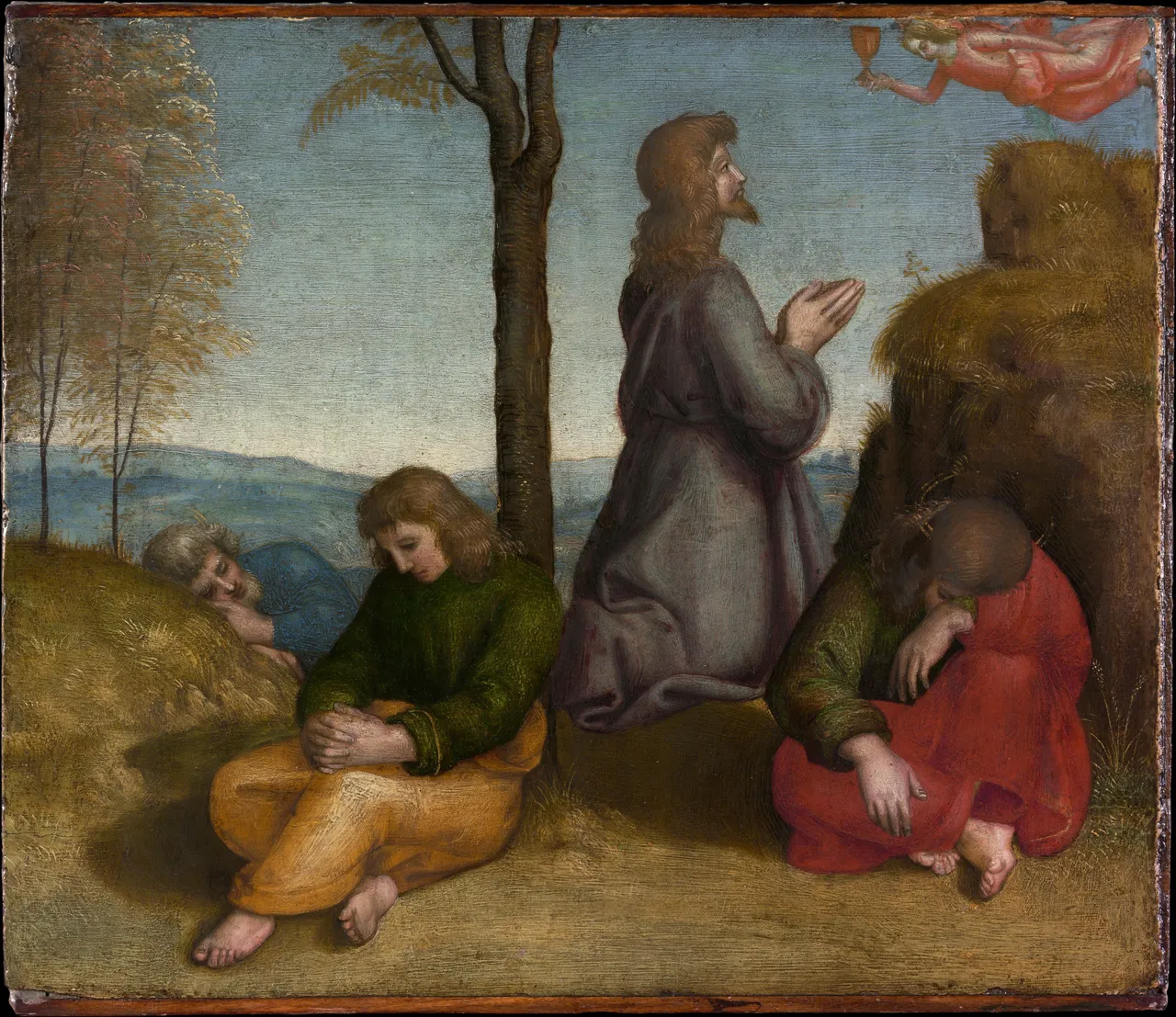
This painting depicts the arrest of Jesus in the Garden of Olives following Judas Iscariot's betrayal. Created around 1445–1450, it originally formed part of the predella, the lower section of an altarpiece whose original setting remains unknown. A particularly interesting detail appears in the upper right corner: a young man flees naked, leaving his clothing behind. This scene refers to the Gospel of Saint Mark (Mk 14:51–52), which describes a young man who escaped from the soldiers during Christ's arrest. Although the Gospel does not identify him, artistic tradition associated him with different disciples, explaining the halo surrounding his head. The mountainous landscape, nocturnal sky, and emphatic gestures of the figures reveal Bartolomeo di Tommaso's expressive style, which favored dramatic intensity over the naturalism characteristic of other Renaissance painters.
A pintura representa a prisão de Jesus no Jardim das Oliveiras, após a traição de Judas Iscariotes. Executada por volta de 1445–1450, fazia parte da predela, a seção inferior de um retábulo de altar, cuja origem permanece desconhecida. Um detalhe especialmente interessante aparece no canto superior direito: um jovem foge nu, deixando suas vestes para trás. A cena faz referência ao Evangelho de São Marcos (Mc 14, 51-52), que menciona um jovem que escapou dos soldados durante a prisão de Cristo. Embora o Evangelho não revele sua identidade, a tradição artística o associou a diferentes discípulos, razão pela qual aparece com uma auréola. A paisagem montanhosa, o céu noturno e os gestos intensos dos personagens revelam o estilo expressivo de Bartolomeo di Tommaso, que privilegiava a dramaticidade das cenas em vez do naturalismo característico de outros pintores renascentistas.
Esta pintura representa el arresto de Jesús en el Huerto de los Olivos, tras la traición de Judas Iscariote. Realizada hacia 1445–1450, formaba parte de la predela, la sección inferior de un retablo de altar cuyo origen permanece desconocido. Un detalle especialmente interesante aparece en la esquina superior derecha: un joven huye desnudo, dejando atrás sus vestiduras. La escena hace referencia al Evangelio de san Marcos (Mc 14, 51-52), que menciona a un joven que escapó de los soldados durante el arresto de Cristo. Aunque el Evangelio no revela su identidad, la tradición artística lo relacionó con diferentes discípulos, razón por la cual aparece con una aureola. El paisaje montañoso, el cielo nocturno y los gestos intensos de los personajes reflejan el estilo expresivo de Bartolomeo di Tommaso, que privilegiaba la intensidad dramática frente al naturalismo característico de otros pintores renacentistas.