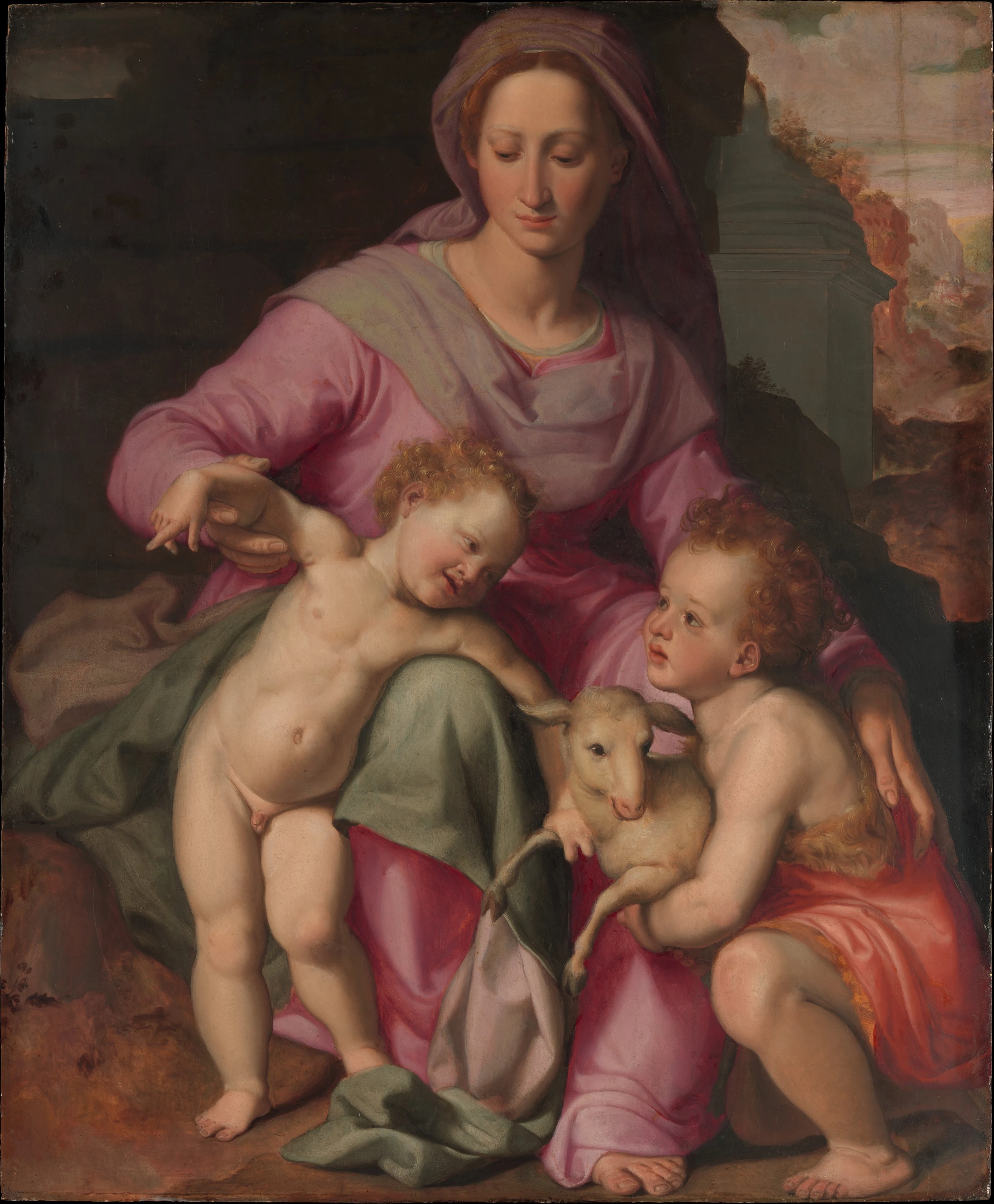
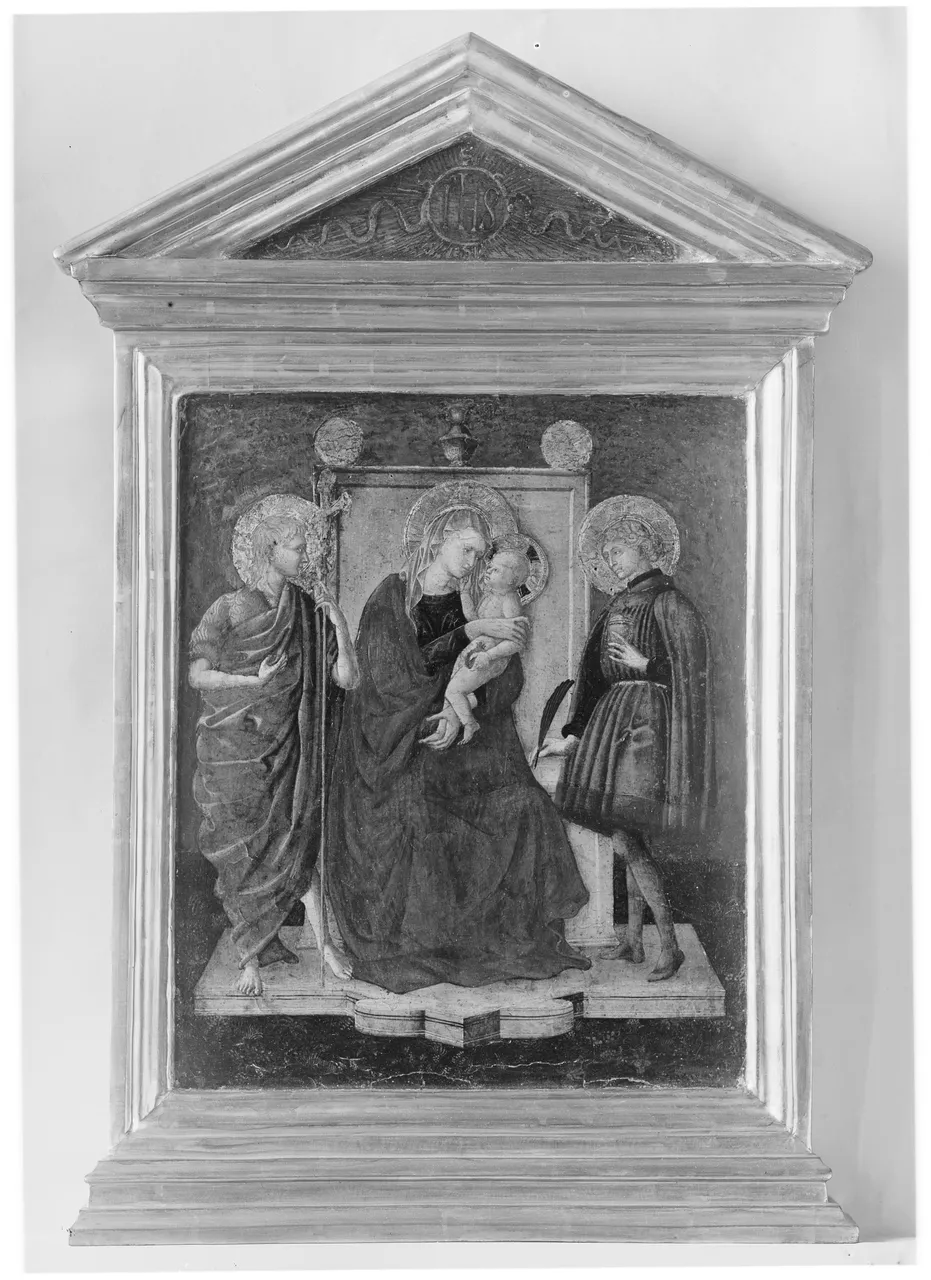
Painted in the early 1570s, this work depicts the Virgin Mary accompanied by the Christ Child and the infant Saint John the Baptist. A particularly significant detail is the lamb held by John, symbolizing Christ, whom the Baptist would later identify as the "Lamb of God, who takes away the sin of the world" (Jn 1:29). The Christ Child's gesture toward the animal establishes a symbolic connection between the Savior's infancy and his future sacrifice on the cross. Santi di Tito portrays the figures with natural expressions and affectionate gestures, moving away from the artificial poses characteristic of Mannerism, the prevailing artistic style in Florence at the time. According to the Metropolitan Museum, his painting recovers the simplicity and balance of earlier masters, particularly Raphael and Andrea del Sarto. The work belongs to a group of similar compositions produced by the artist, with other versions preserved at the Casa Martelli Museum in Florence and in a private collection. Its intimate, domestic character reflects the renewal of religious painting encouraged by the Catholic Reformation, which favored clear, accessible images capable of inspiring devotion among the faithful.
Pintada no início da década de 1570, a obra representa a Virgem Maria acompanhada pelo Menino Jesus e por São João Batista ainda criança. Um detalhe especialmente significativo é o cordeiro que João segura nos braços, símbolo de Cristo, a quem o Batista identificaria mais tarde como o "Cordeiro de Deus, que tira o pecado do mundo" (Jo 1,29). O gesto do Menino Jesus, que se aproxima do animal, estabelece uma ligação simbólica entre a infância do Salvador e seu futuro sacrifício na cruz. Santi di Tito apresenta os personagens com expressões naturais e gestos afetuosos, afastando-se das poses artificiais características do maneirismo, estilo predominante na Florença da época. Segundo o Metropolitan Museum, sua pintura recupera a simplicidade e o equilíbrio de mestres anteriores, especialmente Rafael e Andrea del Sarto. A obra pertence a um grupo de composições semelhantes realizadas pelo artista, com outras versões conservadas no Museu Casa Martelli, em Florença, e em uma coleção particular. Seu caráter íntimo e familiar reflete a renovação da pintura religiosa promovida pela Reforma Católica, que valorizava imagens claras, acessíveis e capazes de despertar a devoção dos fiéis.
Pintada a principios de la década de 1570, esta obra representa a la Virgen María acompañada por el Niño Jesús y san Juan Bautista cuando todavía era niño. Un detalle especialmente significativo es el cordero que Juan sostiene en sus brazos, símbolo de Cristo, a quien el Bautista identificaría más tarde como el "Cordero de Dios, que quita el pecado del mundo" (Jn 1,29). El gesto del Niño Jesús hacia el animal establece una relación simbólica entre la infancia del Salvador y su futuro sacrificio en la cruz. Santi di Tito representa a los personajes con expresiones naturales y gestos afectuosos, alejándose de las posturas artificiales características del manierismo, estilo predominante en la Florencia de la época. Según el Metropolitan Museum, su pintura recupera la sencillez y el equilibrio de maestros anteriores, especialmente Rafael y Andrea del Sarto. La obra pertenece a un grupo de composiciones semejantes realizadas por el artista, con otras versiones conservadas en el Museo Casa Martelli, en Florencia, y en una colección privada. Su carácter íntimo y familiar refleja la renovación de la pintura religiosa promovida por la Reforma Católica, que valoraba imágenes claras, accesibles y capaces de despertar la devoción de los fieles.